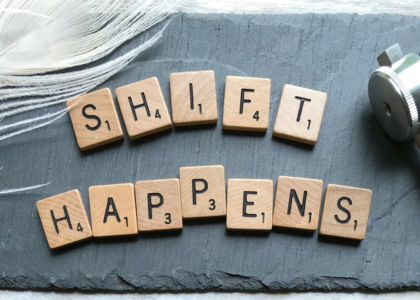

Photo by Chris Lawton on Unsplash
Why the strengths that built your career may become the very things holding you back.
When you start driving a car, you don’t begin in fifth gear.
You begin in first.
The first gear serves an important purpose. It gives the car enough power to move from a standstill. But imagine trying to drive an entire highway journey without ever changing gears.
The engine would struggle.
The ride would become inefficient.
Eventually, the vehicle would protest.
Not because first gear is wrong.
Because it was designed for a different stage of the journey.
Human growth works in remarkably similar ways.
Many of the qualities that help us succeed early in life or in our careers are genuinely valuable. They help us learn, establish credibility, and build confidence.
But as our responsibilities grow, those same qualities can quietly become constraints if we continue to rely on them without adapting.
The challenge is rarely about working harder.
It is about recognising when it is time to shift gears.
Every Strength Has a Shadow
Psychologists have long recognised that strengths can become liabilities when overused.
A strength is not universally beneficial. Its effectiveness depends on context.
Attention to detail is an excellent example.
Early in your career, it earns trust. Your thoroughness reduces mistakes and demonstrates competence.
As you step into leadership, however, that same attention to detail can take on a different form.
You begin reviewing every piece of work yourself.
Delegation becomes uncomfortable.
You struggle to let others own outcomes.
What once looked like diligence now appears as micromanagement.
The behaviour changed very little.
Its impact changed completely.
The same is true for many strengths:
- Being highly responsible can become an inability to set boundaries.
- Being dependable can become difficulty saying no.
- Being analytical can become overthinking.
- Being prepared can become fear of uncertainty.
- Being independent can become reluctance to ask for help.
- Being humble can become invisibility.
The strength is rarely the problem.
The attachment to it is.
The Beliefs Beneath the Behaviour
Most leadership challenges are not behavioural problems.
They are belief problems expressed through behaviour.
Consider someone who insists on checking every detail before a presentation.
The visible behaviour is perfectionism.
The invisible belief might be:
“If I don’t know every answer, people will lose respect for me.”
Another leader hesitates to delegate.
The visible behaviour is control.
The hidden belief could be:
“If someone else makes a mistake, it reflects on my worth.”
Someone avoids speaking in senior meetings.
The behaviour is silence.
The underlying belief may be:
“I must be completely certain before I deserve to contribute.”
Behaviours are rarely random.
They are manifestations of deeper assumptions we hold about ourselves, other people, and the world.
Until those assumptions are examined, the behaviour often returns, even after learning new techniques.
Adult Development Is an Ongoing Process
Developmental psychologists have shown that growth is not simply about accumulating knowledge.
It is about transforming how we make meaning.
The beliefs that once protected us eventually need to be questioned.
What once created safety may later restrict possibility.
Learning gives us new tools.
Unlearning helps us release outdated assumptions.
Relearning allows us to build a more adaptive way of leading and living.
This is why growth often feels uncomfortable.
We are not merely changing habits.
We are renegotiating identity.
The Courage to Say, “I Don’t Know”
Many professionals believe that leadership requires certainty.
In reality, today’s most effective leaders are comfortable with uncertainty.
Not because they know everything.
Because they trust themselves to learn.
There is remarkable psychological safety in hearing a leader say,
“I don’t know yet. Let’s figure it out together.”
That statement reflects confidence rather than weakness.
It signals curiosity instead of defensiveness.
It creates trust instead of distance.
The need to appear certain often comes from an old belief that competence must always be visible.
True leadership recognises that credibility is built not through perfection, but through integrity, humility, and adaptability.
The Inner Gear Shift
External promotions often happen faster than internal transformation.
Your title changes.
Your responsibilities change.
But your beliefs remain untouched.
This creates an invisible tension.
You continue operating from an identity designed for yesterday’s challenges while facing tomorrow’s responsibilities.
The result is exhaustion.
Not because you are incapable.
Because your internal operating system has not evolved alongside your external role.
Real transformation happens when identity catches up with opportunity.
Coaching Doesn’t Add Another Gear
People often come to coaching hoping to become more confident, more influential, or more decisive.
Those outcomes matter.
But coaching rarely begins there.
It begins with curiosity.
What belief is driving this behaviour?
What assumption have you never questioned?
What identity are you still protecting?
What strength has become overused?
What version of you is trying to solve today’s challenges using yesterday’s strategies?
When these questions are explored without judgment, something powerful begins to happen.
The need to control softens.
The fear of uncertainty loosens.
Delegation becomes possible.
Visibility feels safer.
Leadership becomes lighter.
Not because new techniques were added, but because unnecessary weight was removed.
Reflection
If your life were a journey in a car, what gear are you still driving in?
Which strengths still serve you?
Which strengths have become habits?
Which habits have become beliefs?
And which beliefs are quietly asking to be thanked for their service—and gently released?
Growth is not about abandoning who you once were.
It is about recognising that every season of life asks something different of you.
The first gear got you moving.
But it was never meant to carry you through the entire journey.